
A listing is not the building
By ResiGrade
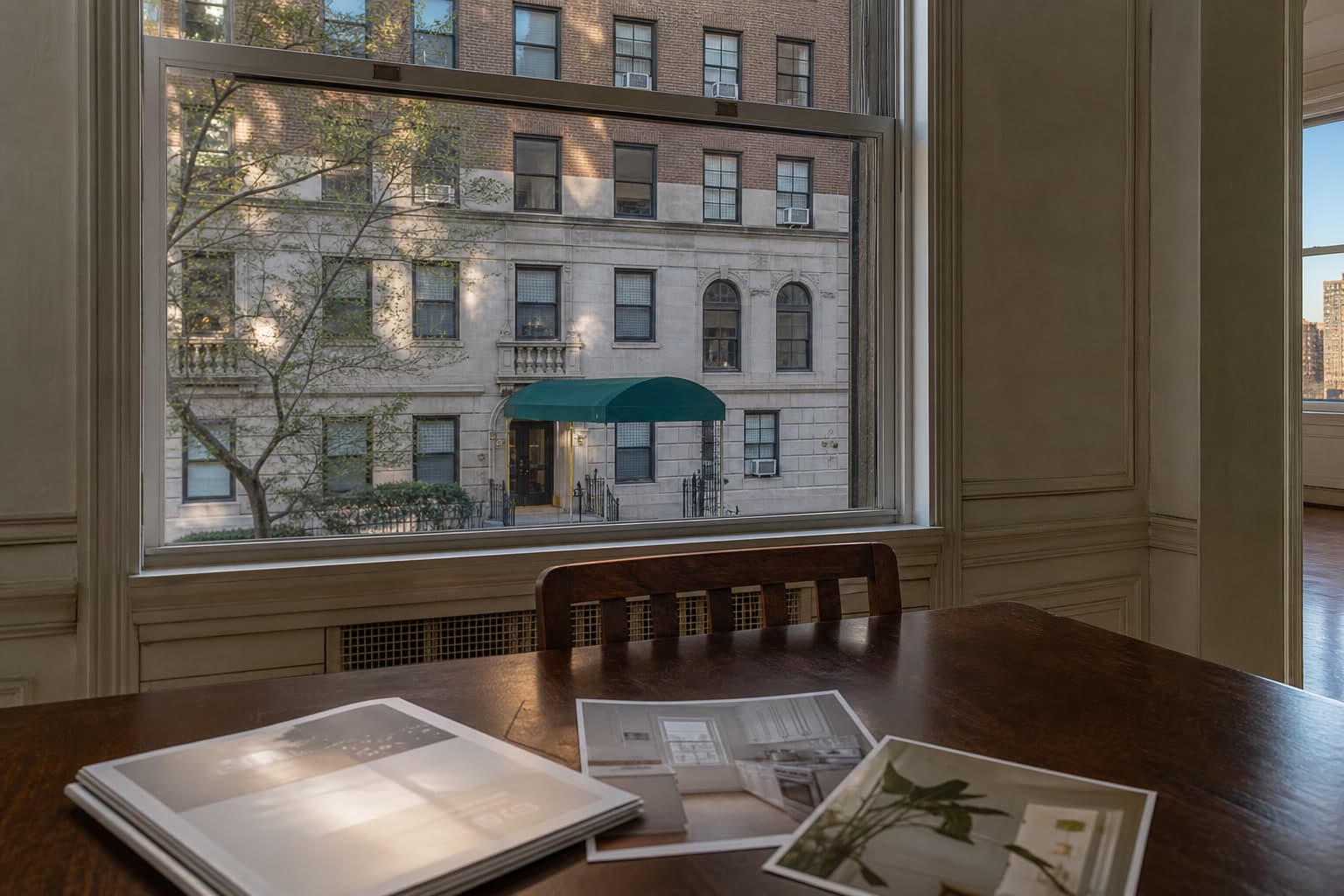
The photos are doing their job. Wide kitchen, south light, a plant that will not be there when you move in. StreetEasy and the broker packet are built to sell rooms. That is not a criticism. It is the job of a listing.
The thing you buy in a New York City co-op is not those rooms. You buy shares in a corporation. That corporation has a board, a managing agent, staff, house rules, and a reserve account. You will live with all of them long after the listing comes down.
What the listing is for
A listing is a sales document. It shows finish, light, layout, and price. It may mention a gym, a roof deck, or a live-in super. It is written to get you through the door and to get an offer on paper.
It is not written to tell you how the board votes, how the managing agent answers email, whether the house rules are applied evenly, or whether the corporation can fund the roof. Those facts live in other files: the financials, the minutes, the house rules, the alteration policy, and the proprietary lease.
If you treat the photos as the building, you are shopping for a set. You should shop for a corporation.
What you are actually joining
In a co-op you do not take a deed to an apartment. You buy shares and you sign a proprietary lease. The corporation owns the building. The board, elected by shareholders, has authority over who can buy in, who can sublet, what work you can do inside your line, and how the building's money is spent.
That is the government of the place you will live. A listing cannot photograph it.
Four things sit on top of the rooms:
- The board sets policy, votes on buyers and alterations, and decides when to spend reserves or raise maintenance.
- The managing agent executes. They send bills, collect paperwork, hire vendors, and run the day-to-day file. They are not the board. They work for it.
- The staff (the super, the porters, the doormen if the building has them) is the building as you meet it every morning. A good super can make a thin building livable. A weak one can make a well-funded building feel neglected.
- The house rules are the small law: pets, washers, work hours, hallway storage, roof access. They outlast the staged furniture.
Reserves sit under all of that. Maintenance pays the operating bill. Reserves are the savings account for the roof, the boiler, the facade, the elevator. A pretty kitchen can sit in a building that cannot fund any of those.
The open house is a stage
An open house is a traffic event. The broker is there to sell the unit. Neighbors who wander through are not a briefing. The super who holds the door is not a substitute for the managing agent's file. Be polite. Take notes. Do not treat a hallway chat as diligence.
If you like the rooms, the next move is not a second showing with a tape measure. The next move is to ask for the documents that describe the corporation. Minutes, financials, house rules, alteration policy. The second showing can wait an afternoon.
A kitchen is not a roof
Staging is cheap compared to a capital project. A seller can paint, swap hardware, and light the rooms well. None of that tells you whether the corporation has been putting money aside, whether the last few years of minutes show deferred work, or whether the board prefers a special assessment to a higher monthly number.
Look at the listing for the apartment. Then look at the corporation for the building.
Ask, before you fall in love with the light:
- Who is the managing agent, and how long have they had the account?
- Are the last two years of financials available, and does the reserve line look like a plan or a leftover?
- What do recent minutes say about capital work, staff, and assessments?
- What does the alteration policy require if you want to change the kitchen you just admired?
- What is the sublet policy, in writing, not as a hallway rumor?
Your attorney will pull a lot of this in due diligence. The point of asking early is simple. The second showing is a bad time to learn that the corporation is thin, the board is slow, or the rules will not let you do the thing you bought the apartment to do.
The monthly maintenance on the listing is one number. What it covers (staff, taxes, the underlying mortgage if the building has one, a contribution to reserves, or almost none of that) is the building. Two apartments with the same asking price can sit in two very different corporations.
Rooms versus how it is to live there
A listing will not tell you whether the board answers, whether rules are applied to everyone or to some people, or whether the managing agent is a partner or a black box. Those are facts about the building as a whole, not about the unit.
ResiGrade is a directory of verified, anonymous resident reviews of that whole: the board, the management, and how it is to live there. The directory is live. The reviews are not in yet. An empty page is not a rating. It is a gap. Treat it that way, and keep reading the files that already exist.
Photos sell rooms. Living there is the corporation you joined.
Transparency starts at home.